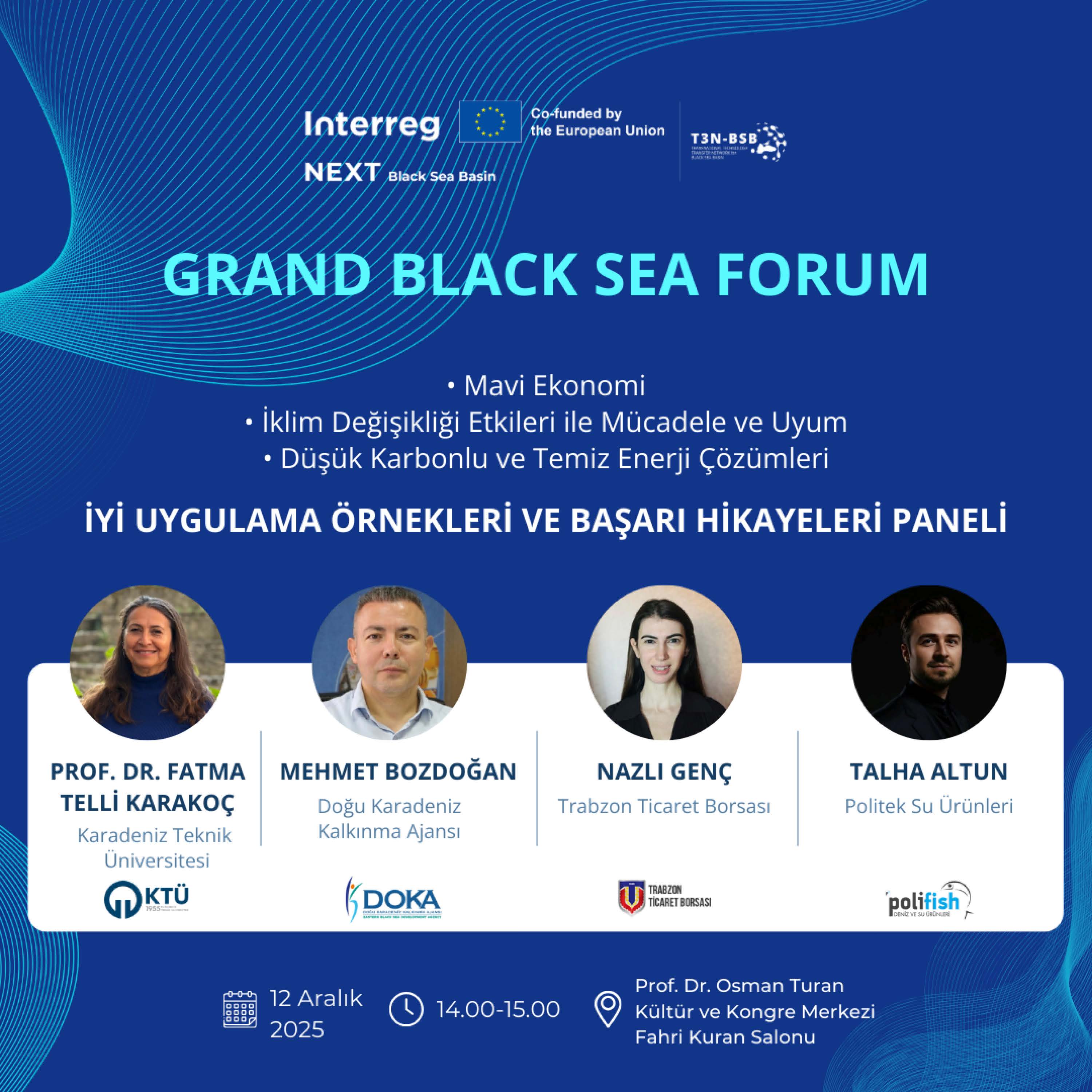
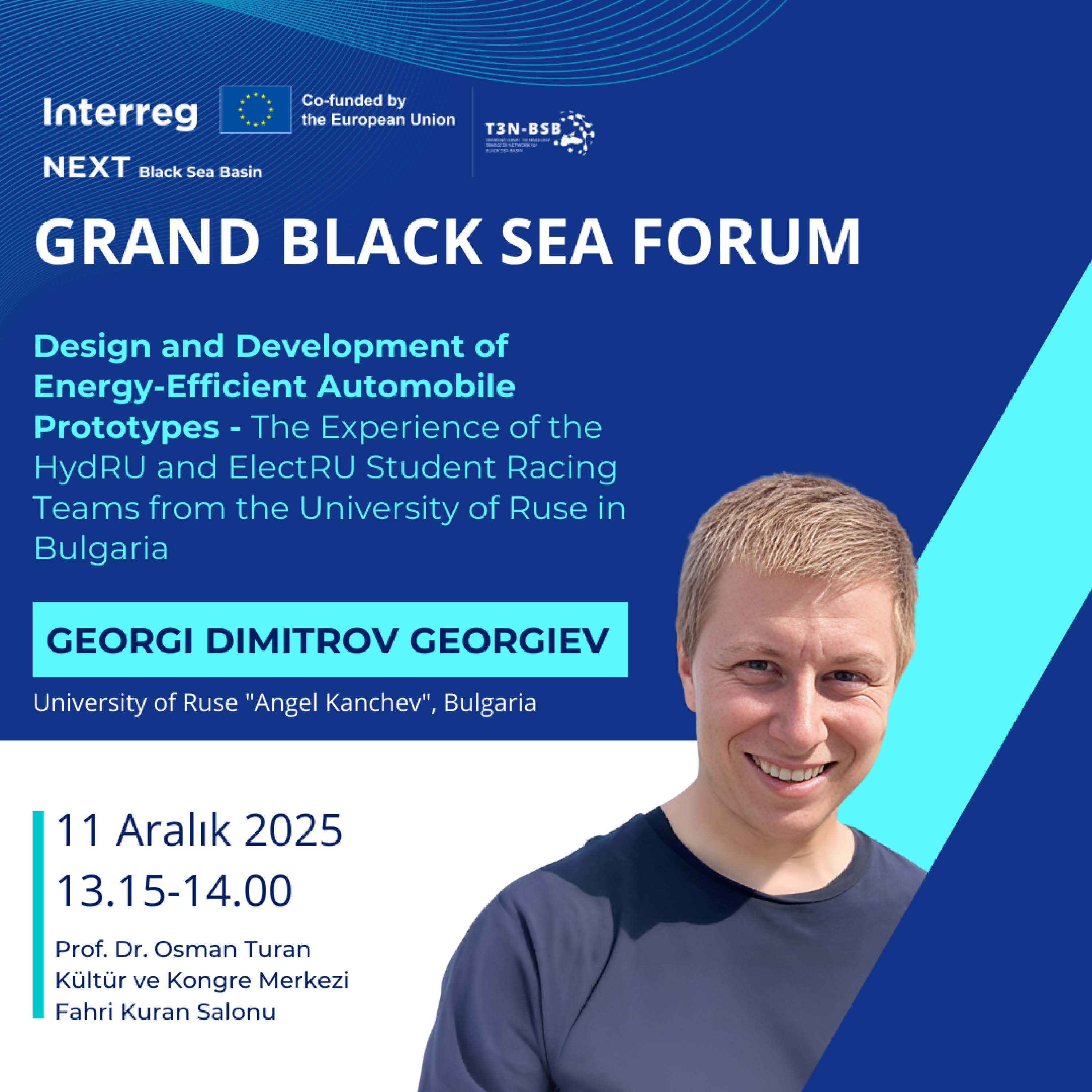
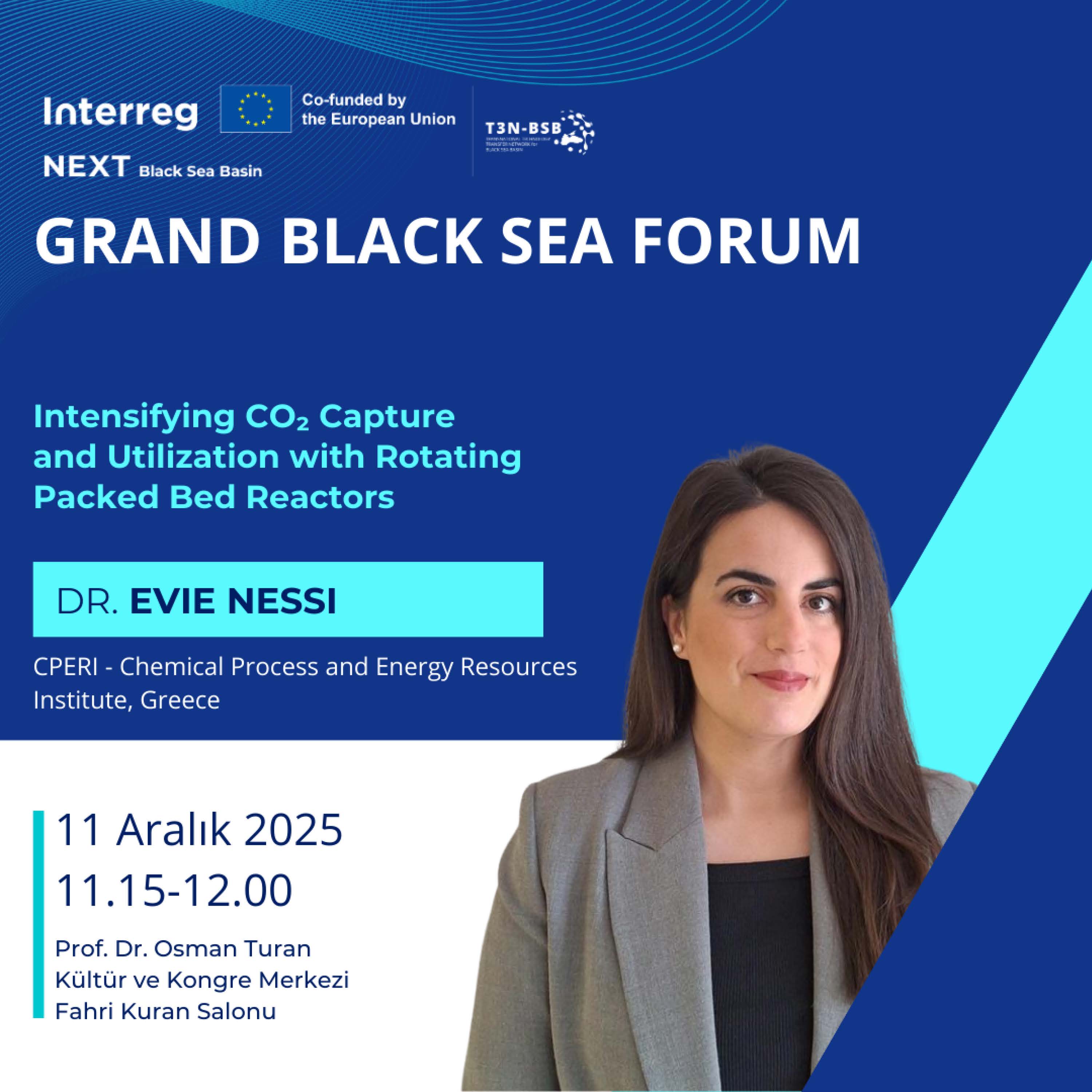
One of the most comprehensive activities in 2025 through which this approach was extended beyond the University to wider stakeholder groups was the Grand Black Sea Forum, held on 10–12 December 2025. The Forum brought together academics, public institutions, private-sector representatives, entrepreneurs, investors, and other regional stakeholders, with “Low-Carbon and Clean Energy Solutions” identified as one of its core themes. Through information seminars, panels, thematic workshops, B2B meetings, and project competitions, the Forum promoted the wider uptake of clean and low-carbon energy technologies, the adoption of new solutions at regional and international levels, and the establishment of new collaborations in this field. The fact that the Forum was free of charge and open to participants from across the region demonstrates that the message of clean-energy transition extended beyond the University community to a much broader range of social and economic stakeholders.
Evidence:
https://bilgiislem.ktu.edu.tr/tto/duyuru/buyuk-karadeniz-forumu-10-12-aralik-2025
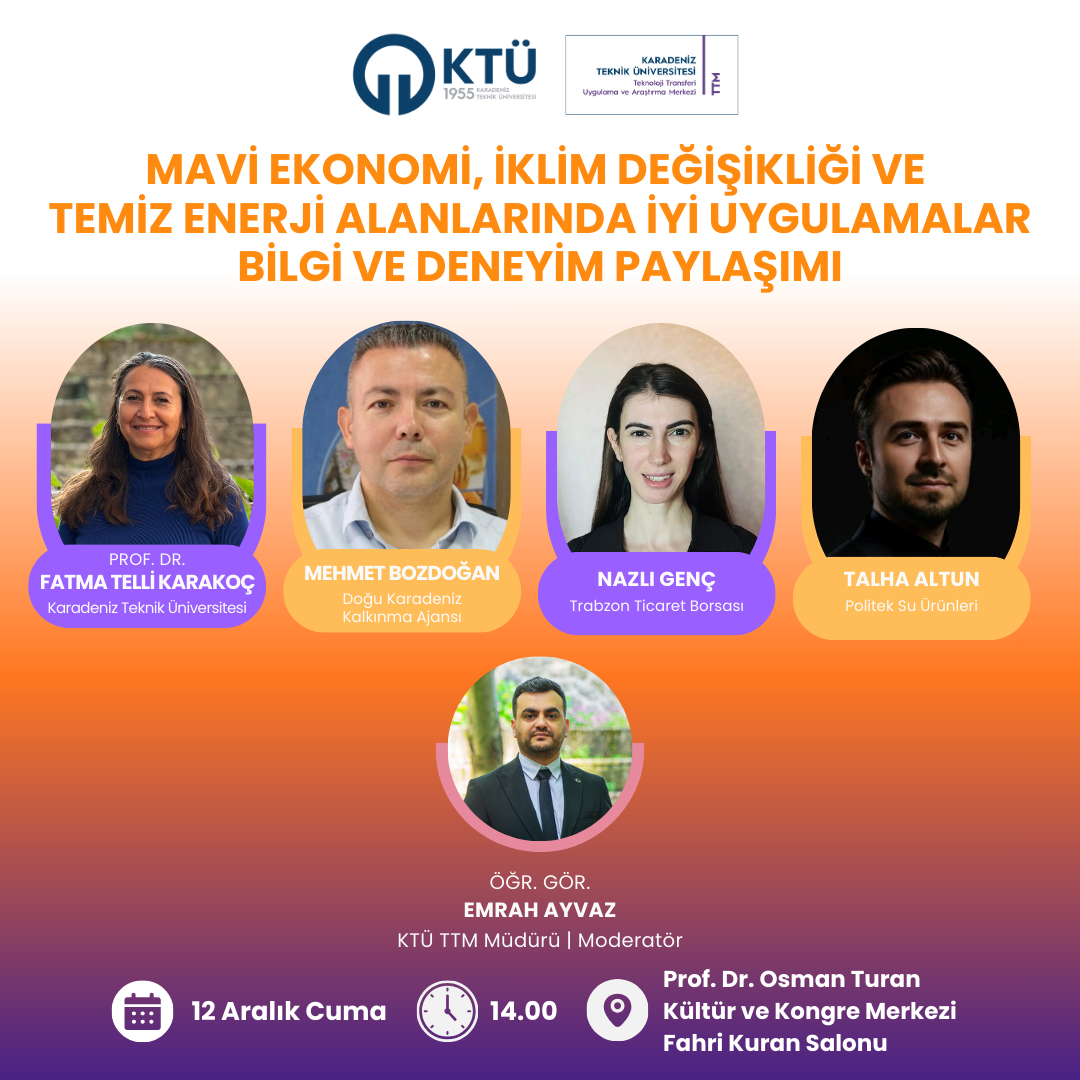
One of the activities that further strengthened the clean-energy dimension of the Forum was the “Best Practices in Blue Economy, Climate Change and Clean Energy: Knowledge and Experience Sharing” session held on 12 December 2025. During the event, representatives from KTÜ, the Eastern Black Sea Development Agency, the Trabzon Commodity Exchange, and the private sector shared their projects and experiences in the fields of clean energy, climate change, and low-carbon development. The event directly contributed to knowledge transfer and awareness raising on clean energy among the University, public institutions, regional development actors, and the private sector.
The Project Competition organised as part of the Grand Black Sea Forum also encouraged not only discussion of the clean-energy transition but the development of concrete solutions. One of the competition’s three priority areas was explicitly defined as “Low-Carbon and Clean Energy Solutions.” In addition to university students and researchers, start-ups, entrepreneurs, companies, clusters, and business support organisations were encouraged to submit projects in this field. This initiative represented an important 2025 mechanism for extending clean-energy transition efforts across the broader innovation and entrepreneurship ecosystem.
Evidence:
https://dents.ktu.edu.tr/tto/etkinlik/buyuk-karadeniz-forumu-proje-yarismasi
To support the research and innovation dimension of the clean-energy transition, the KTÜ Technology Transfer Application and Research Centre also promoted the 2025 Clean Energy Transition Partnership (CETPartnership) call and launch event to the University community and relevant external stakeholders. Co-funded by the European Union, the programme supports international R&D projects aimed at developing technologies and system solutions required for the green-energy transition. The participation of organisations from Türkiye through the TÜBİTAK 1071 Programme demonstrates KTÜ’s role in facilitating access to national and international research and innovation ecosystems supporting the clean-energy transition.
Evidence:
https://ktu.edu.tr/tto/duyuru/temiz-enerji-gecisi-ortakligi-cetpartnership-2025-acilis-etkinligi
Our University also went beyond awareness raising and information-sharing activities by initiating a concrete transformation of its own energy infrastructure in 2025. Under the Public and Municipal Renewable Energy Project (KAYEP), financed by the World Bank and implemented by the Republic of Türkiye Ministry of Environment, Urbanization and Climate Change, a sub-project was launched to install solar energy systems on the roofs of KTÜ buildings. The stated objective of the project is to meet all or part of the electricity consumption of public buildings from renewable energy sources and to increase renewable-energy use in the public sector. In this way, the University is also translating the renewable-energy transition it promotes publicly into practical action within its own infrastructure.
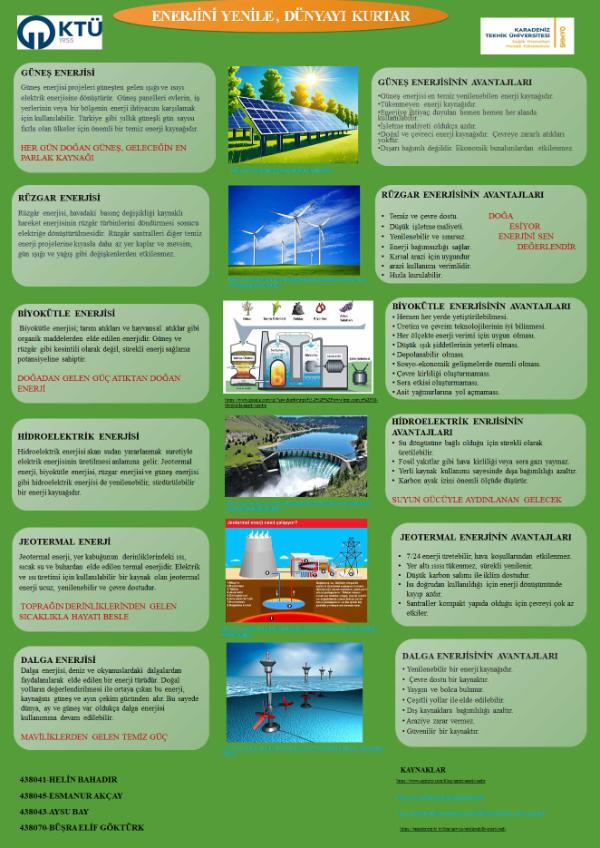
Other clean-energy awareness activities held in 2025 further supported this approach. During the “1st Affordable and Clean Energy Event” held on 23 May 2025, renewable energy sources including solar, wind, hydroelectric, and biomass energy were discussed alongside the environmental impacts of fossil fuels, energy conservation, and carbon footprints. The importance of clean-energy use for environmental and economic sustainability was explicitly emphasised. In addition, during the 8th Energy Day held on 6 May 2025, representatives of the energy sector discussed renewable energy, energy efficiency, and technological transformation within the energy sector.
Evidence:
https://surdurulebilirlik.ktu.edu.tr/shmyo/etkinlik/1-erisilebilir-ve-temiz-enerji-etkinligi
Overall, in 2025 our University extended its commitment to expanding renewable-energy use, reducing dependence on fossil fuels and carbon emissions, and accelerating the clean-energy transition beyond the boundaries of the University by engaging public institutions, the private sector, entrepreneurs, investors, and the wider community. Taken together, the Grand Black Sea Forum, clean-energy best-practice events, publicly accessible KTÜ TV programmes, CETPartnership activities, low-carbon project competitions, and the KAYEP solar-energy investment demonstrate that the University maintained a strong and sustained mechanism for public advocacy, awareness raising, and stakeholder engagement in support of the transition toward renewable energy.