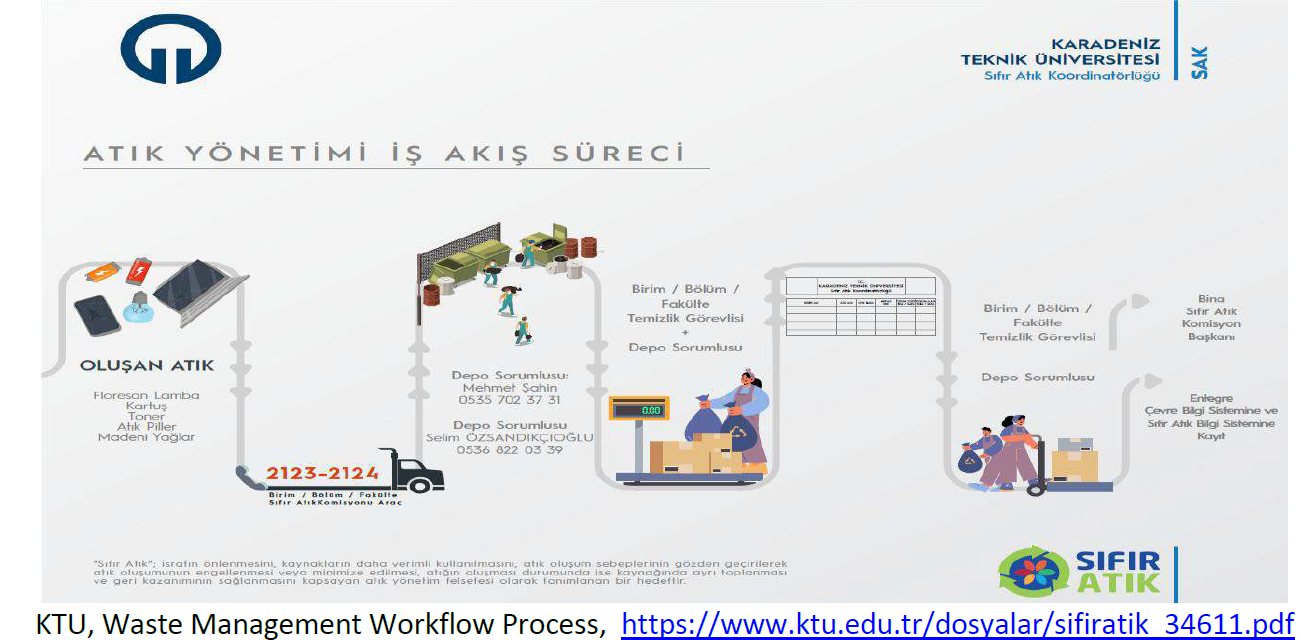
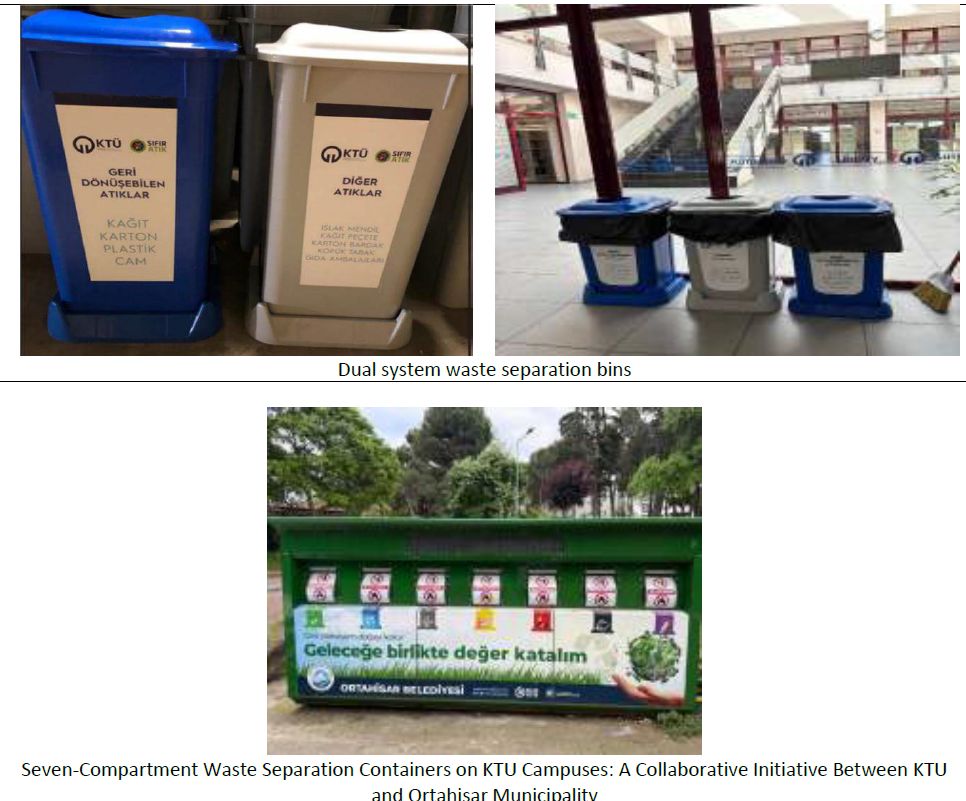
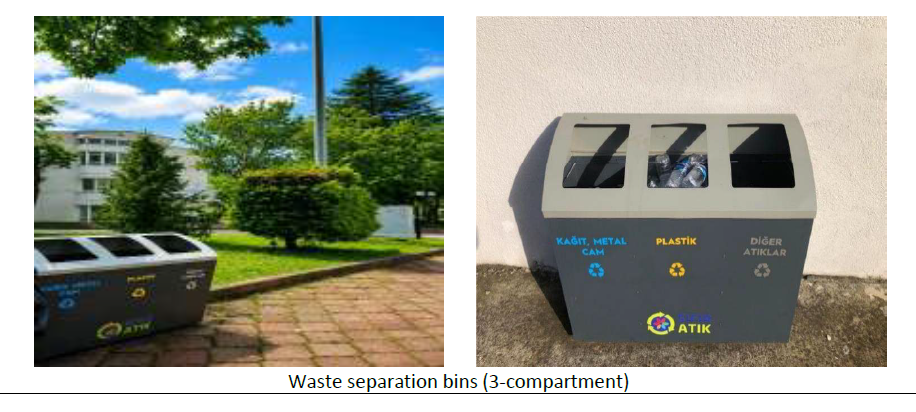
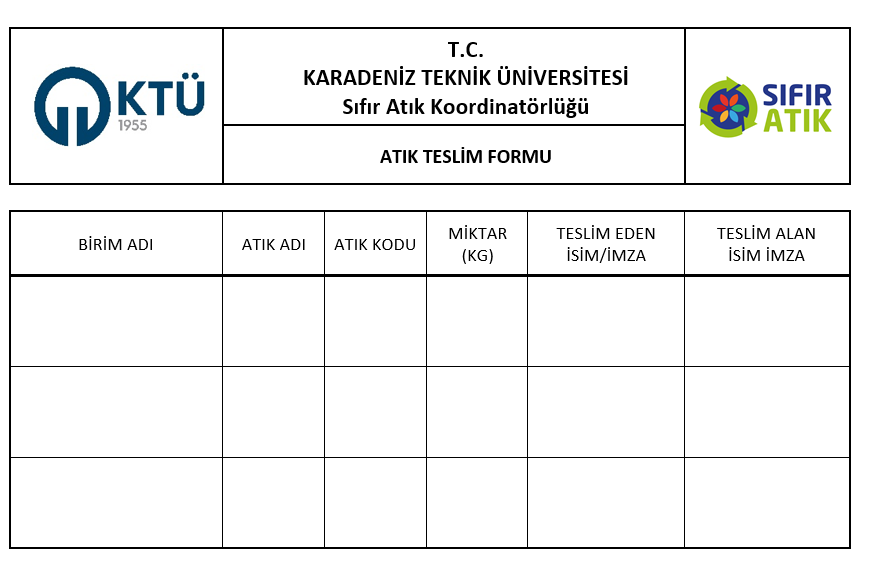
The processes of systematically and effectively monitoring, managing, and reporting waste at Karadeniz Technical University (KTU) are carried out by the Zero Waste Coordination Unit. The unit oversees the processes of separate collection at the source, transportation, temporary storage, and delivery to licensed facilities of all campus-generated waste, keeping records in line with relevant regulations.
By coordinating with all academic and administrative units, recycling, reuse, and disposal operations are carried out in a controlled manner. The collected data are regularly evaluated in reports and submitted to senior management and relevant institutions. In this way, KTU contributes to environmental sustainability while fulfilling its institutional responsibilities in compliance with the Zero Waste Regulation of the Ministry of Environment, Urbanization, and Climate Change.
Among the goals of the Coordination Unit is minimizing the amount of waste generated across KTU’s Kanuni Campus and other campuses, ensuring that recyclable waste is processed in compliance with the Zero Waste Regulation, while non-recyclable waste is safely disposed of. Additionally, items suitable for reuse are recovered whenever possible.
In this context, during 2025, paper waste collected from units was sorted, and reusable materials (such as file folders, transparent files, and binders) were redistributed to units or made available in the library reading rooms for student use.
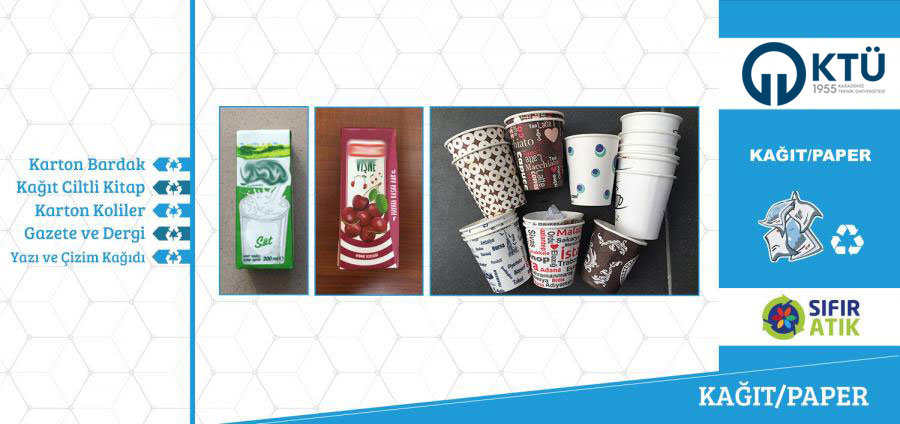
In 2025, with the goal of raising awareness of recycling and protecting the environment, the Coordination Unit collected paper waste from university campuses and affiliated units and delivered it to a licensed recycling facility through a tender process. This effort not only created economic value but also contributed to the preservation of natural resources.
Based on the official request dated 21.07.2022 (E-24129208-103.99-266804), paper waste inventories were prepared. Legally unnecessary documents, qualified paper waste, and sensitive materials requiring disposal under personal data protection laws were shredded at the university printing house and stored in the paper waste depot. Later, 22 tons of waste were auctioned and converted into economic value.
One of the major tasks of the Coordination Unit has been addressing improperly collected chemical waste that existed before the zero waste system was implemented. Through inventories and consultations with unit-level zero waste committees, such waste was reviewed, labeled with correct codes, collected with appropriate equipment, and sent to licensed firms for safe disposal.
Plant waste resulting from the maintenance and pruning of green areas on campus is processed using a shredding machine. The resulting material is spread over green areas and around plant roots, contributing to natural recycling. This mulch provides organic matter enrichment, reduces water loss, and prevents weed growth, helping to create a sustainable green space system on campus.
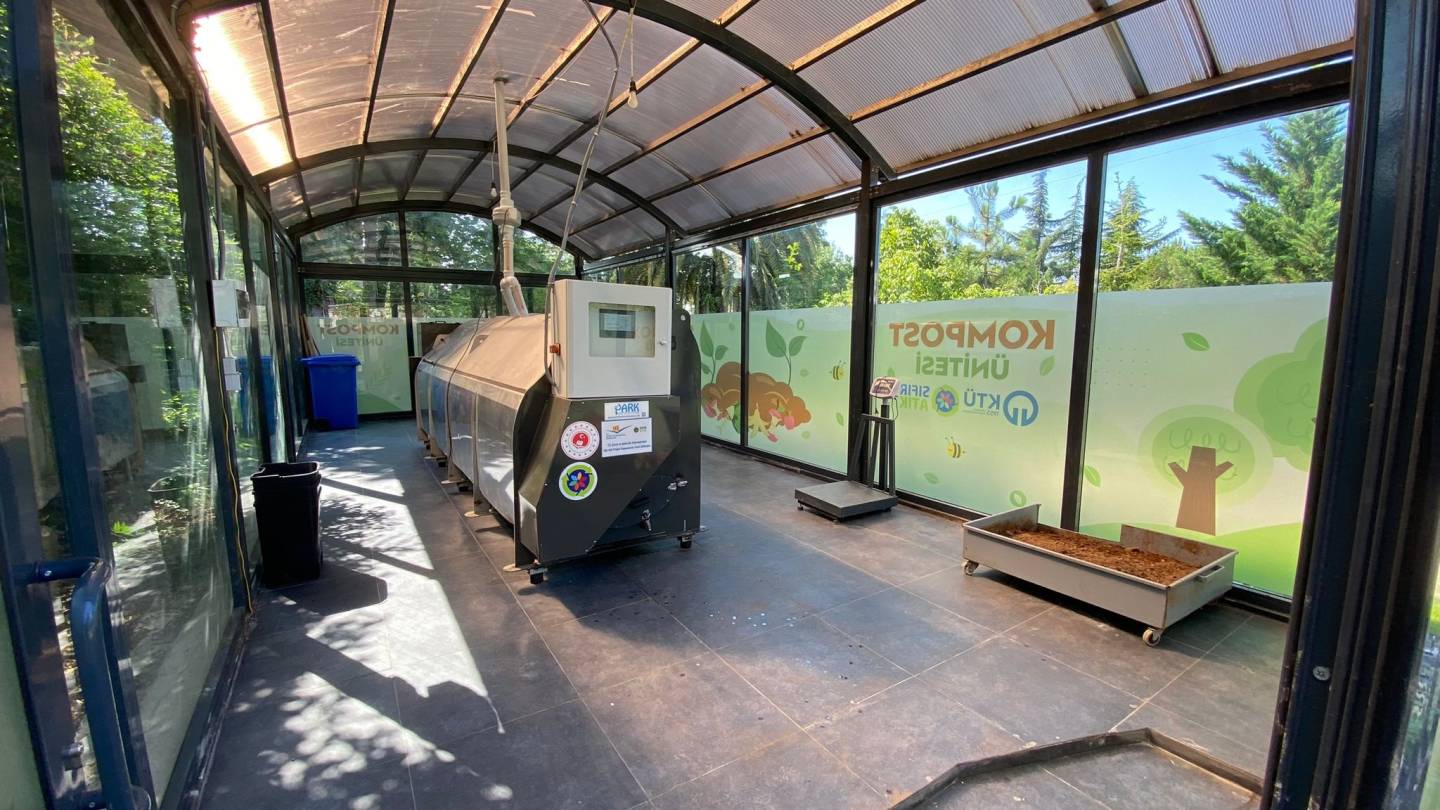
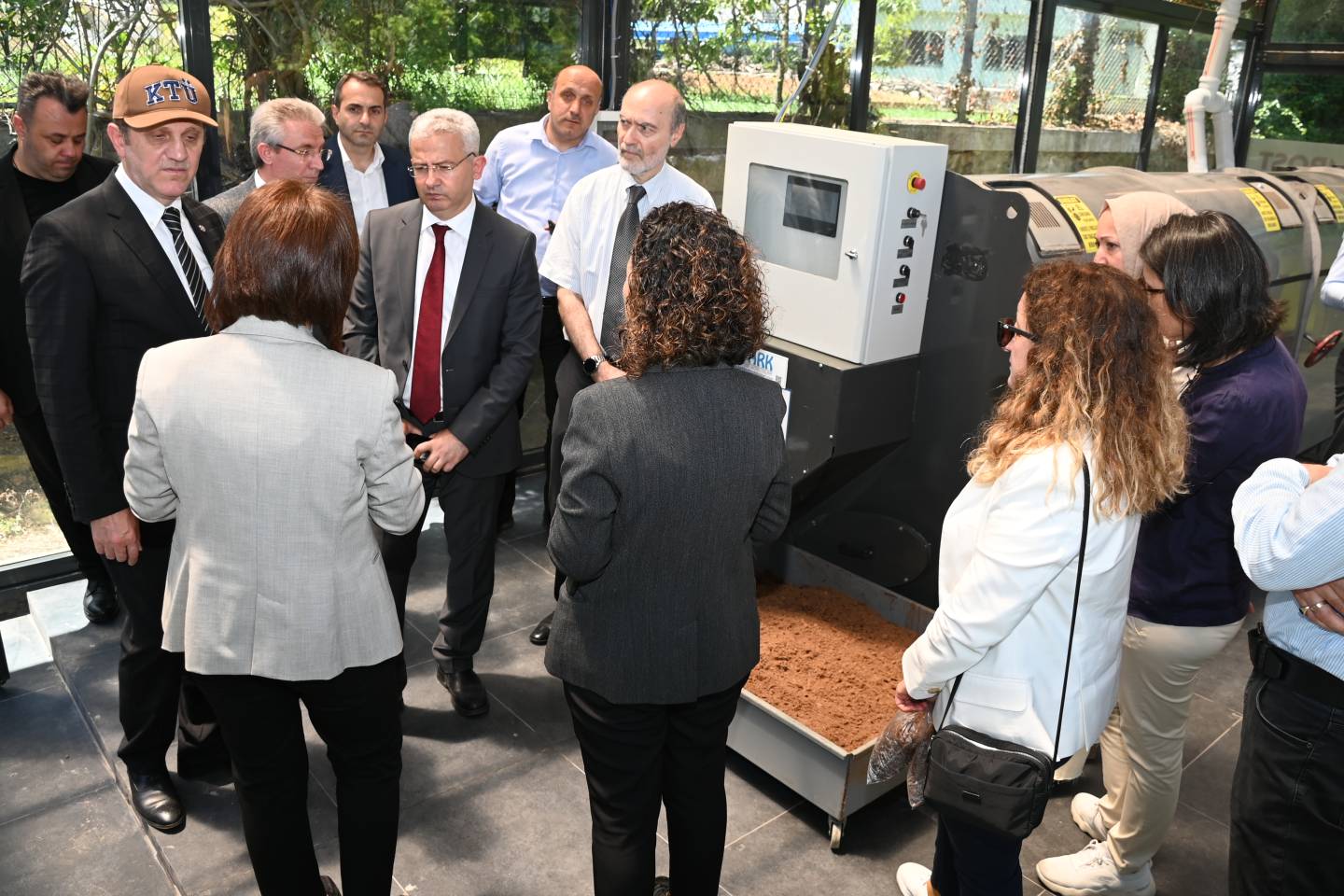
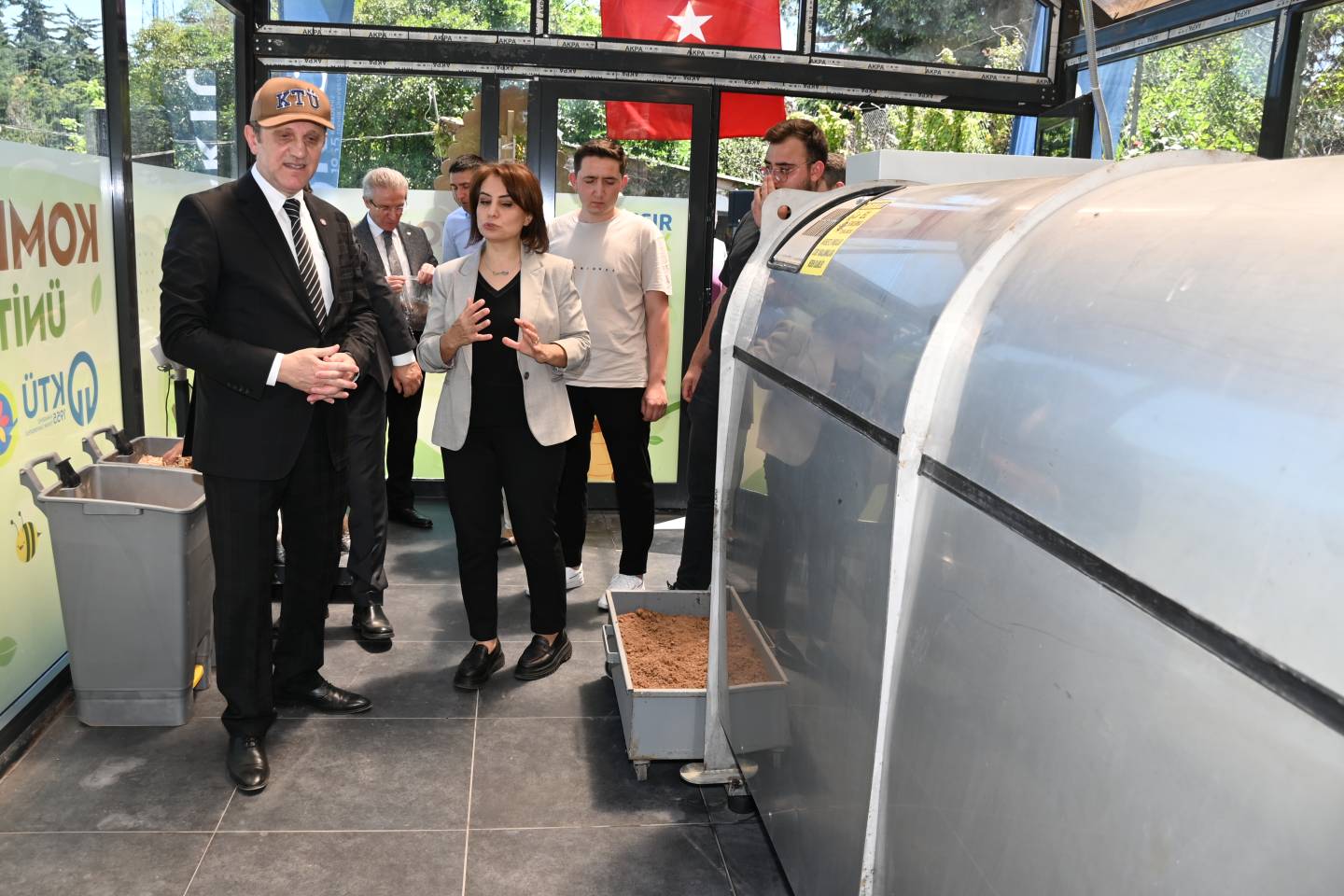
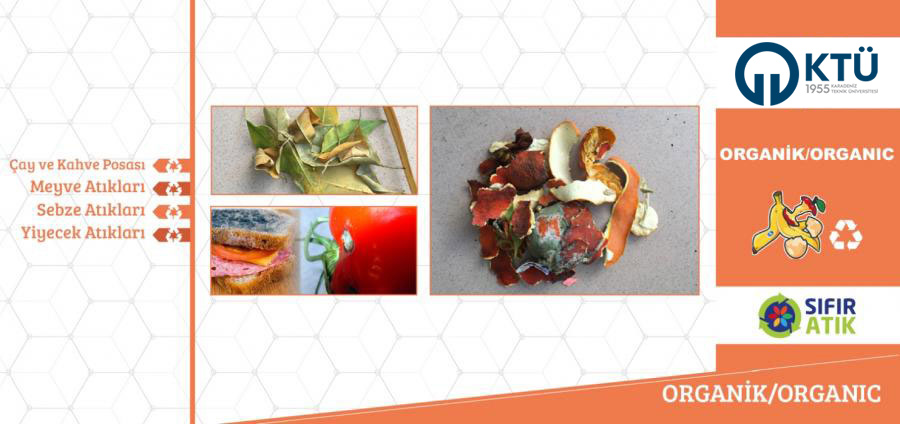
Organic waste from campus dining facilities and the hospital cafeteria is processed into compost using both open-air methods and composting machines. A composting machine, previously unused at a district municipality, was transferred to KTU through negotiations conducted via the Governorship and a signed protocol. To support these efforts, two contracted staff members have been assigned by the Rectorate to the Environmental Unit for managing organic waste processes.